· News, CSR and the Environment
PTBA and the Government Preserve Bird Habitat and Mangroves on Alanggantang Island
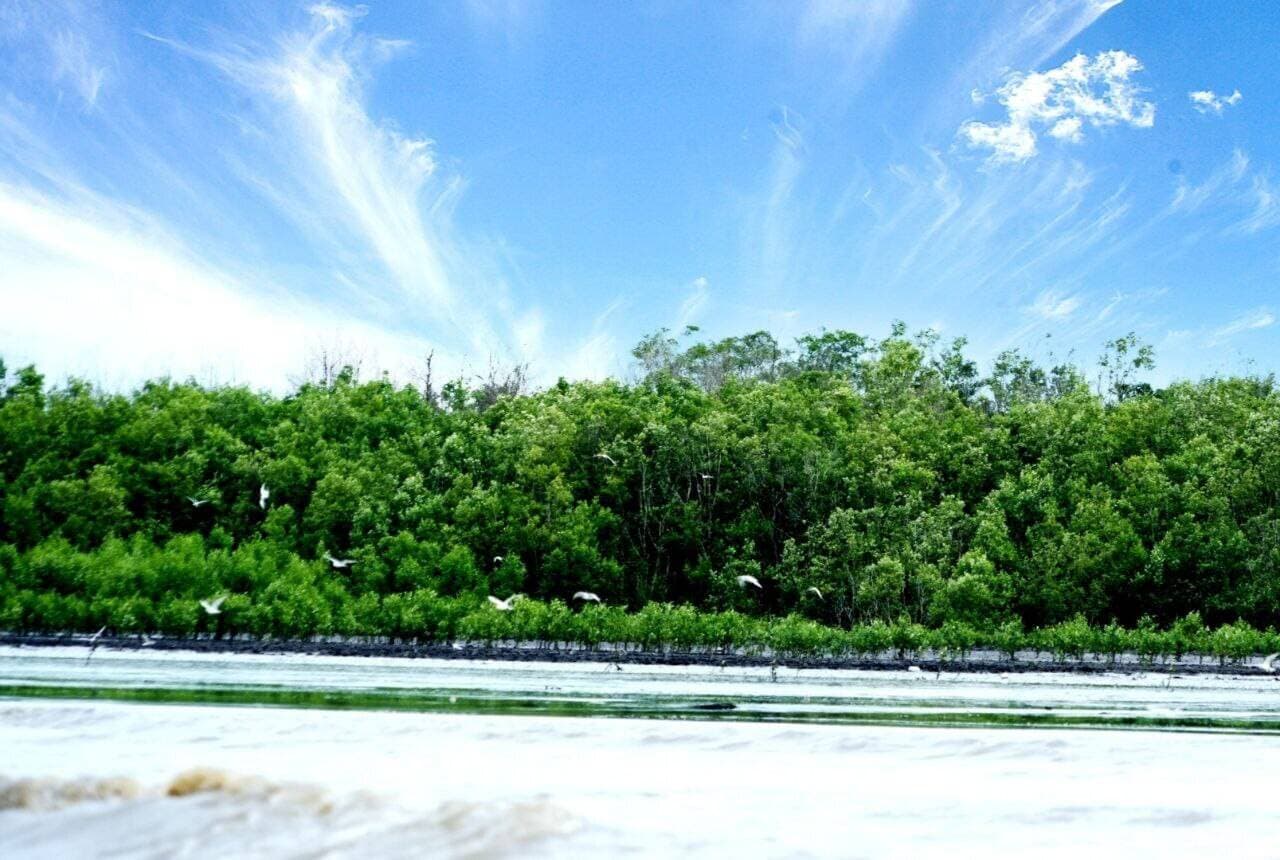
From October to February, thousands of migratory birds from Siberia, Russia, transit at the mangrove forest on Alanggantang Island to search for food before heading to Australia. This annual phenomenon attracts many tourists and drives the local economy.
Alanggantang Island is in the Berbak Sembilang National Park, Banyuasin Regency, South Sumatra, can be reached with two-hour drive from Palembang City and 2.5 hour water route by speedboat. Once damaged by fires in 1994-1997, Alanggantang Island is managed to be restored and now beautiful again full with mangroves.
Through collaboration with the Berbak Sembilang National Park Agency (BTNBS) and the Musi River Watershed Management Office (BPDAS), PT Bukit Asam Tbk (PTBA) has played a role in restoring the condition of Alanggantang Island. Since 2021, PTBA has planted mangroves as a measure for the rehabilitation of 300-hectare watershed area on this island.
"Mangrove forests have a very important role for the environment and local communities. Therefore, PTBA is working with BTNBS and BPDAS Musi to perform rehabilitation as an effort to maintain and restore the function of the mangrove forest ecosystem both in terms of physical, biological, ecological and economic aspects so that it can function optimally," said PTBA VP of Environmental Management and Mine Support, Amarudin.
There are 994,851 seedlings prepared by PTBA for the first stage of planting, consisting of a combination of mangrove species (Rhizopora spp.) and Api Api species (Avicennia spp.). The planting rehabilitation method used was a density of 3,300 stems/ha.
Not only beneficial for environmental sustainability, watershed rehabilitation also supports the development of ecotourism on Alanggantang Island. With watershed rehabilitation, PTBA also creates new jobs for the community such as nursery, planting, maintenance and other activities.
"Mangrove rehabilitation is a national program included in the 2020-2024 National Medium-Term Development Plan. This program is one of the pillars in efforts to preserve the environment, empower communities, and support ecotourism development around the company's operational areas," said Amarudin.
Mangrove planting is also part of PTBA's commitment to decarbonize, in line with its vision of becoming a world-class chemical and energy company that cares about the environment and in accordance with PTBA's noble purpose as a member of the MIND ID mining SOE holding “We explore natural resources for civilization, prosperity, and brighter future”.
As of October 2022, PTBA has conducted watershed rehabilitation in 33 villages in 4 districts, namely Muara Enim (South Sumatra), Lahat (South Sumatra), Banyuasin (South Sumatra), and Kulonprogo (Special Region of Yogyakarta), with total area of 5,197 hectares (ha), of which 453 ha has been handed over to the Ministry of Environment and Forestry and stakeholders, while 4,744 ha are in the stage of preparation, planting and maintenance. There are 3,853,828 trees for the watershed rehabilitation program.