· News
Make Your Own Biodiesel
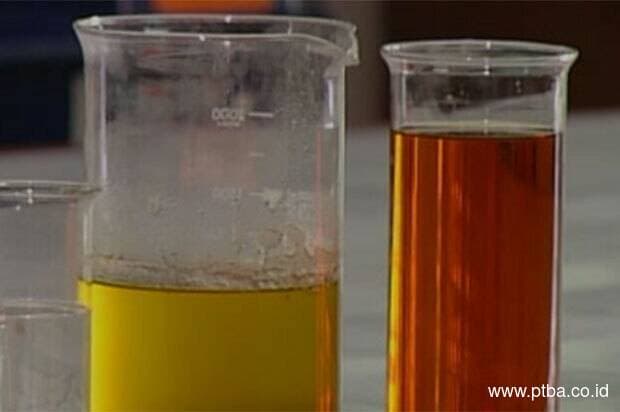
Diesel fuels, not only made from petrochemical process but also can be made of fatty acid ester from vegetable oil. The product is called boidiesel. Biodiesel is known as environmentaly friendly product, non pollution to air, easily biodegradable and made from renewable raw material.
Biodiesel is an exoginated fuel, made from vegetable oil or animal oil through chemical process of fatty acid and triglycerides transesterification. As non fossil fuels, biodiesel can be made from palm oil, jatropha oil and soybean oil. However, based on scale of economic and for product expansion, biodiesel made from palm oil has more potential. It is due to the infrastructures and superstructures availability in Indonesia. Biodiesel which made from palm oil has better productivity than ones that made from jathropha oil and soybean oil.
Since made from palm oil, it is guaranteed as an environmentally friendly fuel. Furthermore, the technology to process palm oil into biodiesel is not a complicated one. It is said that anyone can make this product.
Generally, biodiesel is made from fatty acid esters with carbon chain number between C6 to C22. Palm oil as one of the vegetable oil has carbon chain number between C14 to C20. Therefore it has better possibility to be developed for biodesel raw material.
Biodiesel is made through two stages transesterification (precipitation) process, then continued with cleaning, drying and filtration. But if the raw material is CPO, it will need to be made into esters acid before proceed.
The first stage of transesterification process is to mix Potassium hydroxide (KOH) and Metanol (CH3OH) with palm oil. It will take 2 (two) hours in temperature of 58 – 65° Celcius. Firts materials that shall be put inside the reactor is fatty acid to be heat up until the desired temperature.
The reactor can be used for heating and mixing. The mixing can be done during the heating process. When Metanol and KOH mixed materials already inside the reactor, it is started and the time need to be counted on. The final result will be metil ester with 94% convertion rate. Then the suspension has to be precipitated certain time to separate between gliserol and metil ester.
The precipitated Gliserol will be on the below part since it has higher density than metil ester. The Gliserol need to be removed from the reactor to purify the supernate for second stage of the transesterification process. After the second stage process finished, it will need to be precipitated again to remove the rest of the Gliserol. The second precipitation will take shorter time than the first one since there are less Gliserol and will be leached during the cleaning process.
The cleaning process aim is to extract the unnecessary materials, as Gliserol and metanol residue. The cleaning process temperature is 55° Celcius and need to repeat it for 3 (three) times until the fluid reach normal acidity (pH 6.8 to pH 7.2).
Drying process aim is to remove the water that mixed within metil ester. It is done in 130° Celcius fror 10 minutes and simultaniously circulating product with heat of 95° Celcius. The end of circulation pipe is placed in the center of the liquid surface on the dryer tools.
The last stage of the biodesel making process is filtration. It is aim to remove unnecessary particles in the biodiesel during the process, as rust (rusty iron) on the reactor wall or pipe wall and dirt from the raw materials. The suggested microfilter is similar or less than 10 μm.
In gasoline we know octan number, but for the diesel we use cetane number (CN). The higher the CN, the faster burning process and the machine can work efficiently. CN in biodiesel can be 64, higher than normal diesel with CN of 50.