· News
Optimizing the Potential of FABA
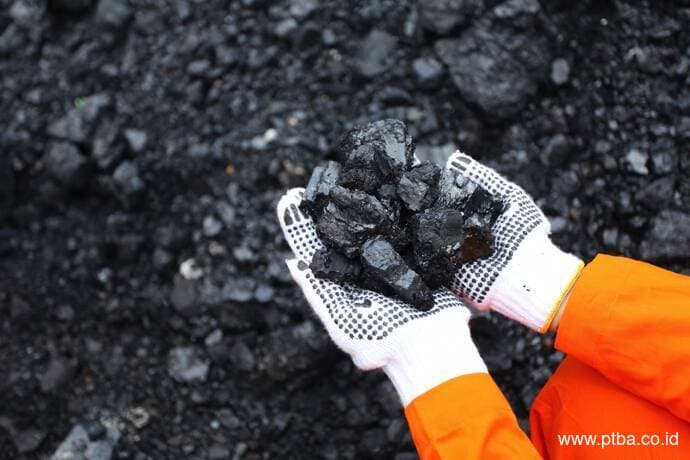
Bukit Asam fully supports the government's move to manage coal ash waste or fly ash and bottom ash (FABA) from PLTU activities, remove it from the B3 waste category. FABA removal from B3 waste category program has already been implemented in several developed countries. Today, the use of FABA is still limited because it is categorized as B3 waste, even though FABA can actually be optimized for infrastructure supporting materials such as roads, conblocks, building materials, and cement.
The Government Regulation number 22 of 2021 concerning Implementation of Environmental Protection and Management has stipulated that waste management must implement the precautionary principle by the producer or processing service for all types of waste, both hazardous and non-hazardous waste, including efforts to reduce waste or waste minimization.
This waste management covers the “from cradle to grave†and “from cradle to cradle†as according to the circular economy principle. The producer is responsible for polluter pay and the proximity of the waste management to the processing location; also taken into account the environmentally sound management.
In the regulation, the B3 waste management is carried out based on technical approval document and is equipped with an operational feasibility letter, while the requirements for managing non-hazardous waste and its management standards are stated in the environmental document approval.
FABA material produced from the coal burning process at stoker boiler facilities and/or industrial furnaces is still categorized as B3 waste because when coal burning activities using low temperatures, it is possible that the unburnt carbon in the FABA is high, indicating incomplete combustion and is relatively unstable when stored, so it is still categorized as B3 waste.
On the other hand, FABA from the combustion process other than this type, such as in PLTUs that use pulverized coal (PC) combustion systems or chain grate Stoker, is no longer categorized as B3 waste. The reason is that the coal burning activities in PLTU is using high temperatures so that the unburnt carbon content in FABA becomes minimum and is more stable when stored. Bukit Asam’s technology has made it possible to capture FABA from the PLTU process.