· Press Release
Coal Gasification into DME, a Strategic Step to Strengthen National Energy Security
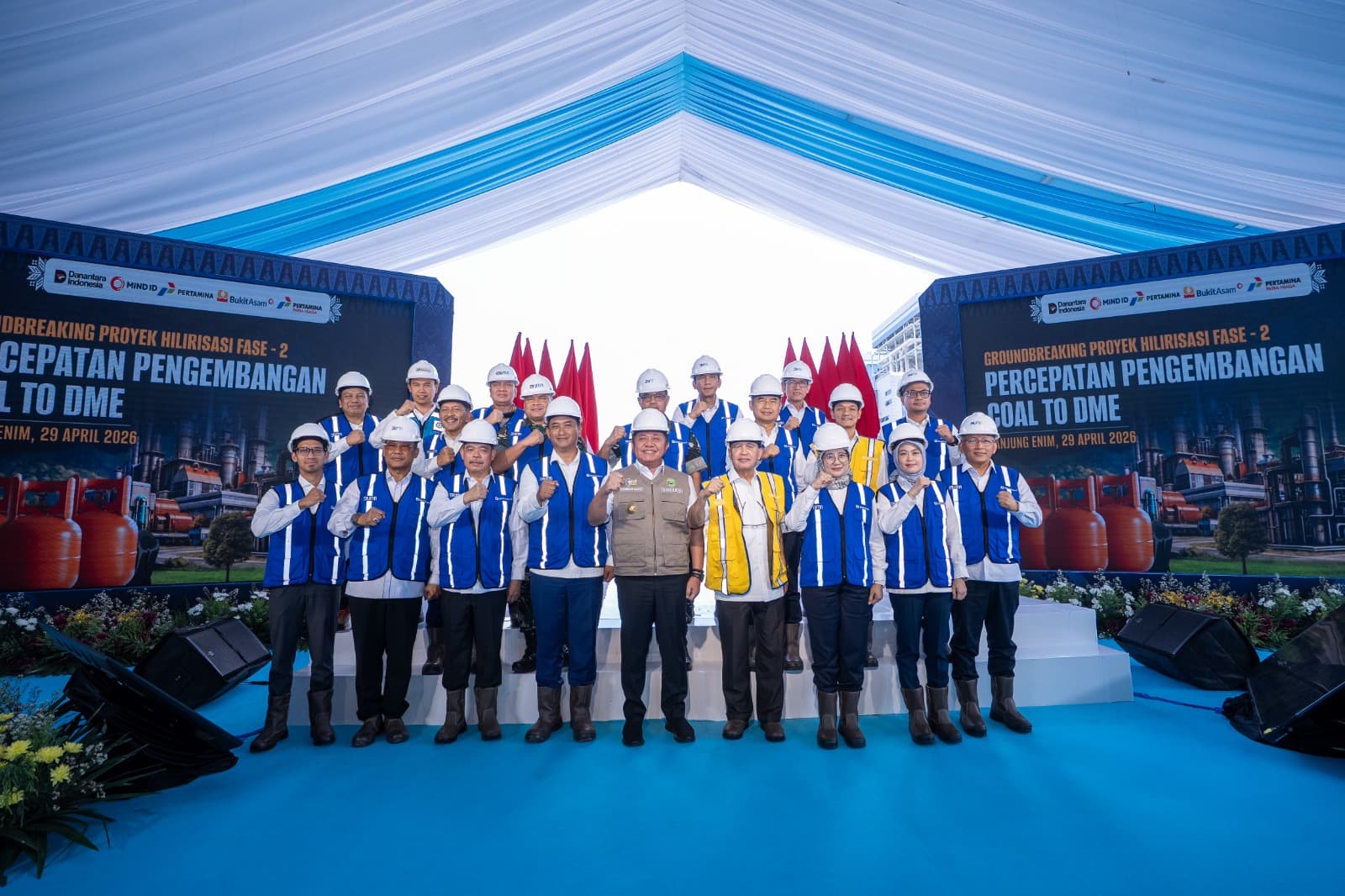
Tanjung Enim, Mei 05, 2026 – PT Bukit Asam (Persero) Tbk (PTBA), a member of the MIND ID Mining Industry Holding, supports national energy security through the development of coal downstreaming into Dimethyl Ether (DME). This is aligned with the Government’s policy to realize Asta Cita, as well as the mandate of Article 33 of the 1945 Constitution, which emphasizes the management of natural resources for the greatest prosperity of the people.
Amid global dynamics marked by geopolitical tensions, supply chain disruptions, and energy price fluctuations, strengthening energy security has become a priority for many countries, including Indonesia.
Currently, Indonesia still faces a dependency on LPG imports to meet household and productive sector needs, which puts pressure on the trade balance, foreign exchange reserves, and the energy subsidy burden.
Through the development of coal downstreaming into DME, PTBA, in collaboration with Pertamina, aims to provide an alternative energy source based on domestic resources while also creating added value for the national coal industry.
The CEO/Head of the Daya Anagata Nusantara Investment Management Agency (BPI Danantara), Rosan Roeslani, emphasized that this project is part of efforts to accelerate national strategic projects in strengthening Indonesia’s economic and energy foundations.
“The development of DME in Tanjung Enim is an important step in reducing dependence on LPG imports, which currently still accounts for around 80% of national demand,” he stated at the Groundbreaking Ceremony for the Phase II Downstreaming Project on Thursday (April 29, 2026).
President Commissioner of MIND ID, Fuad Bawazier, stressed that coal downstreaming into DME is a strategic initiative that provides significant benefits and advantages for the country, both tangible and intangible. He underlined that many of these benefits cannot be fully reflected in corporate financial statements. Therefore, he emphasized the importance of support from all stakeholders to accelerate the downstreaming project for the broader national interest.
“The DME project delivers substantial benefits to the country. However, many of these benefits cannot be recorded in corporate books. Hopefully, this project can be realized and implemented according to target so that we can become a nation that is self-sufficient in energy and food,” said Fuad.
MIND ID President Director Maroef Sjamsoeddin stated that the coal downstreaming project into DME is part of a broader strategy to increase the added value of Indonesia’s mineral and coal resources.
“MIND ID will continue to encourage synergy among group members and strategic partners to ensure that downstreaming projects run optimally and sustainably, while delivering tangible contributions to national energy security,” said Maroef.
PTBA President Director Arsal Ismail emphasized that coal downstreaming into DME reflects the company’s readiness to address national energy challenges, making it more than just an industrial project.
“This project is also aligned with Asta Cita, particularly in strengthening energy sovereignty, promoting national industrialization, increasing the added value of natural resources, and creating productive and sustainable employment,” Arsal explained.
In a similar vein, PTBA Director of Downstreaming and Product Diversification, Turino Yulianto, stated that DME development is part of the company’s business transformation and also a National Strategic Project (PSN), playing a key role in creating new energy sources while addressing national energy security challenges.
“The development of DME is a strategic step to reduce LPG imports, save foreign exchange, and strengthen domestic industry,” said Turino.
In addition to reducing import dependency, this project is also expected to generate broad economic impacts, ranging from job creation and the growth of supporting industries to increased economic activity in the regions.
Through synergy with various stakeholders and direct government support, this downstreaming project is expected to become one of the key pillars in achieving sustainable national energy security.