· Press Release
Strengthening Occupational Safety Culture, Bukit Asam Launches Golden Rules Version 5.0
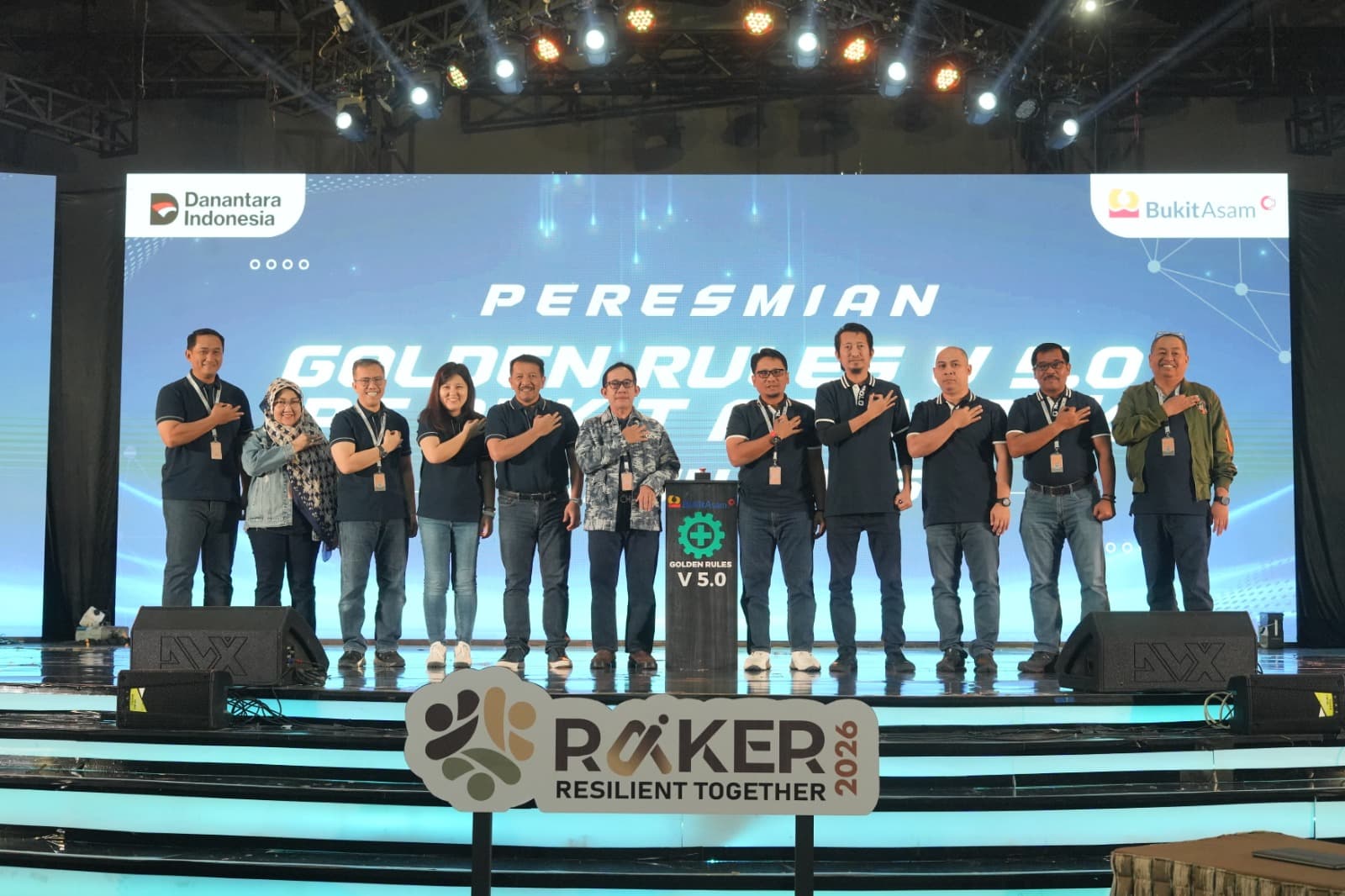
Jakarta, January 22, 2026 – PT Bukit Asam Tbk (PTBA) has officially launched Golden Rules Version 5.0 as the company’s primary guideline for safety and sustainability in controlling critical risks, preventing workplace accidents, and safeguarding environmental sustainability across all operational activities.
Golden Rules Version 5.0, which represents a continuous refinement of previous versions, comes into effect in January 2026. The guideline was developed through a comprehensive process by a cross-functional Golden Rules Formulation Team, taking into account lessons learned from various incidents, evolving on-site risk dynamics, and the adoption of industry best practices.
President Director of PTBA, Arsal Ismail, expressed his appreciation and gratitude to the Golden Rules Version 5.0 formulation team for their commitment, collaboration, and tangible contributions in establishing this shared standard.
He acknowledged that alongside increasing production targets, the company faces increasingly significant and complex operational challenges.
Heightened operational dynamics demand organizational readiness to continue working in a disciplined and controlled manner while consistently prioritizing safety and environmental protection in every activity.
“Golden Rules Version 5.0 is part of the company’s commitment to ensuring business sustainability through safe, responsible operations that are aligned with sound environmental management,” Arsal explained.
According to him, safety and environmental protection are strategic elements that support business continuity and build the trust of stakeholders, who play a vital role in the company’s success.
Arsal emphasized that exemplary conduct must be demonstrated consistently and reflected in leadership, decision-making processes, priority setting, and daily work behaviors.
He expressed hope that with the implementation of Golden Rules Version 5.0, safety values and environmental awareness will become further internalized, thereby strengthening the company’s work culture and supporting long-term sustainability.
Chairman of the Golden Rules Formulation Team, Yuhendri, emphasized that Golden Rules do not belong to a single function or unit. Rather, they represent a corporate commitment that applies across all functions and work units, requiring alignment of roles and responsibilities among all employees.
He stressed that safety can only be achieved when every part of the organization, without exception, adopts the Golden Rules as a common reference in working, collaborating, and making decisions.
“We recognize that Golden Rules Version 5 may not yet be entirely perfect. Nevertheless, this guideline has been established as a shared reference that must be complied with and implemented,” Yuhendri stated.
As implementation progresses, the application of the Golden Rules will continue to be monitored, evaluated, and refined on an ongoing basis to ensure continued relevance to evolving risk dynamics and the company’s operational needs.
“We believe that consistent implementation of the Golden Rules Version 5.0 will strengthen the safety culture, ensure operational continuity, and support the achievement of reliable, productive, and sustainable company performance,” Yuhendri concluded.