· Press Release
Strengthening Food Security, PTBA Distributes 3,500 Chili Seedlings to Farmer Groups in Sawahlunto
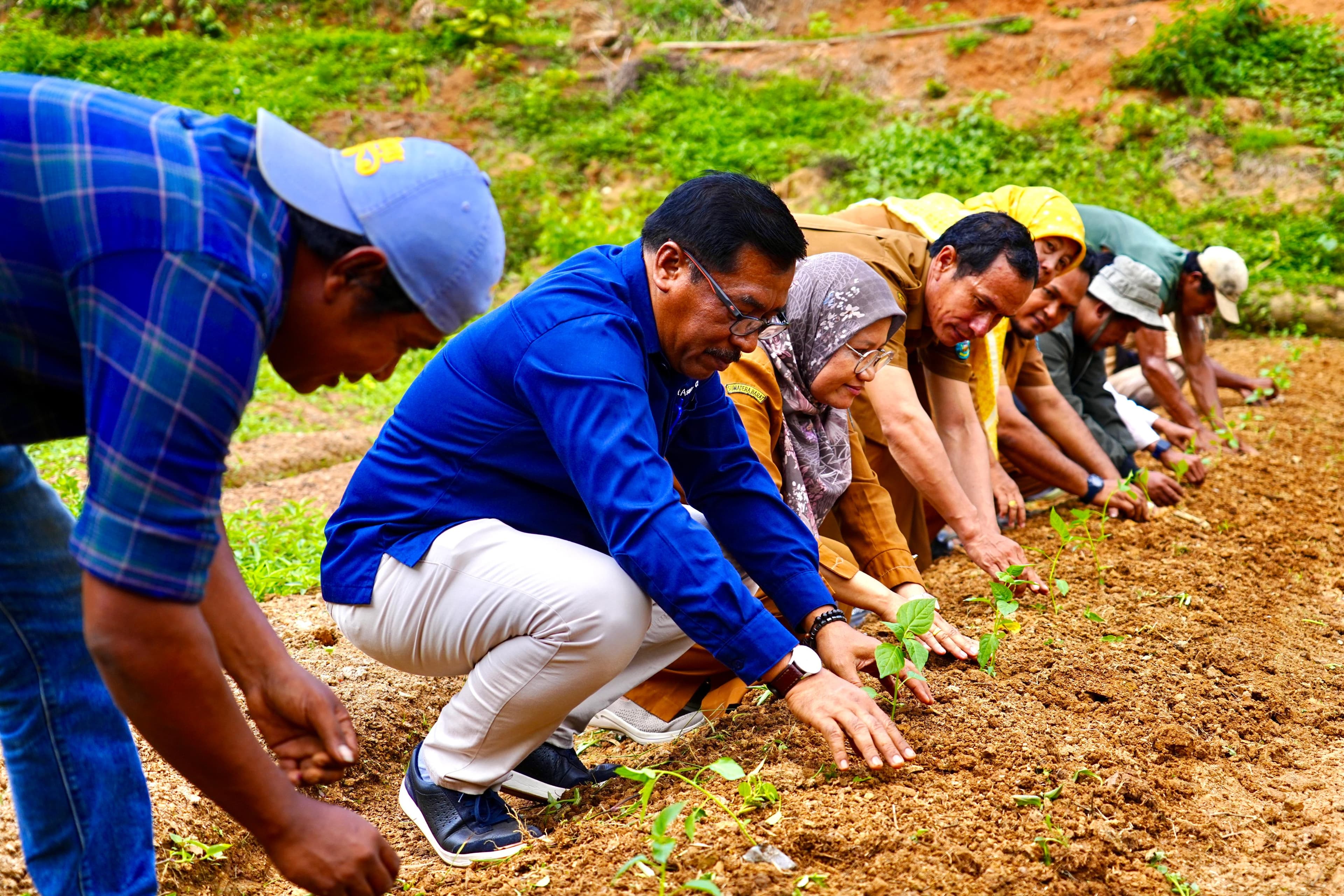
Sawahlunto, 24 November 2025 — PT Bukit Asam (PTBA) is strengthening food security and improving the local economy in Sawahlunto, West Sumatra, through the distribution of 3,500 chili seedlings to the Tani Jaya farmer group in Barangin District.
Yulfaizon, General Manager of PTBA’s Ombilin Mining Unit, stated that this program is part of the synergy between the company and the local government to develop the horticulture sector in post-mining areas.
“This is not only part of our corporate social responsibility (CSR), but also PTBA’s commitment to continuously create meaningful value for the community and the surrounding environment,” he said.
In addition to providing chili seedlings, PTBA also offers technical assistance in collaboration with agricultural extension officers to ensure farmers receive proper education and competencies for efficient, productive, and results-oriented chili cultivation.
Bambang Eryadi, Chairman of the Tani Jaya Farmer Group, said the assistance greatly helps reduce production capital costs amid fluctuating prices and the prolonged drought that has affected the region in recent months.
“This support came at exactly the right time. Besides the seedlings, we also received guidance from agricultural extension officers who taught us about fertilization, pest control, and proper chili plant maintenance,” he said.
Head of the Sawahlunto Food Security, Agriculture, and Fisheries Office (DKP3), Henni Purwaningsih, explained that chili cultivation is part of the region’s agricultural diversification strategy, aimed at optimizing rainfed land and hilly areas that are less suitable for rice crops.
“Chili is a strategic choice because of its high economic value. PTBA’s support strengthens our efforts to maintain local food productivity,” Henni said.
Henni added that agricultural extension officers play an active role in educating farmers—from seed selection to post-harvest handling—and encouraging farmer groups to improve their market access.
According to data from the West Sumatra Central Bureau of Statistics (BPS) and the Directorate of Horticulture of the Ministry of Agriculture, the production of large and bird’s eye chilies in the province decreased by around 7.3 percent in the second quarter of 2025 due to the dry season that lasted from April to August. However, with increasing rainfall at the start of the third quarter, production is expected to recover by 10–12 percent, including in producing regions such as Sawahlunto and Tanah Datar.
This situation has also affected price fluctuations. The price of red chili in West Sumatra rose by 54.50 percent month-to-month in September 2025 and became the main contributor to the province’s inflation, which reached 4.22 percent.
“With the arrival of the rainy season and the resumption of planting activities, the use of subsidized fertilizers and seedlings can be optimized according to the Group Definitive Needs Plan (RDKK),” Henni added.
Sawahlunto Mayor Riyanda Putra expressed his appreciation for the synergy between PTBA and the farmer groups, noting its tangible impact on community welfare.
“Collaboration between the government, the private sector, and the community is the development model we aim to promote. Food security is not only about production but also about economic independence for the people,” Riyanda said.
He added that the initiative aligns with President Prabowo Subianto’s Astacita vision, which prioritizes national food self-sufficiency and strengthening the people’s economy based on local potential.
The Sawahlunto City Government, he continued, is also enhancing training programs, farmer entrepreneurship assistance, and integrated market access for horticultural products to create broader benefits for the community.
“With continuous monitoring and cross-sectoral support, Sawahlunto is expected to become a model of a productive and resilient post-mining city, where industry and society grow together in social, economic, and environmental harmony,” Riyanda concluded.